The recent surge in forest loss due to wildfire and drought-related tree mortality across California is widely perceived as a growing threat to values that span agricultural, ecological, and human resource sectors. In Mediterranean forests, however — where seasonal droughts and periodic fire play vital ecological roles — it is not the presence of fire itself that is problematic. More frequent fire is needed to restore historical fire regimes that were once maintained by lightning ignitions and Indigenous stewardship. The greater concern lies in the increasing proportion of fires that burn at high or extreme severity, often resulting in broad-scale conversions of historically tree-dominated landscapes to persistent shrub-dominated landscapes (Nemens et al. 2022).
To counteract this trend, installation of strategically placed treatments has become a key strategy to alter wildfire behavior in dry mixed-conifer forests of the Sierra Nevada and southern Cascades (North et al. 2024). An informed arrangement of discrete fuel reduction treatments across a landscape can reduce the proportion of wildfires that have high severity effects across the entire landscape (Finney 2001) because treatments can slow down wildfire momentum. While there is both modeled fire behavior and empirical evidence supporting this as a possible outcome for a given wildfire, stands that have not had surface fuel reduction treatments are still vulnerable to high severity effects compared to treated stands, regardless of the presence of nearby treatments (Agee and Skinner 2005). Designing silvicultural treatments to reduce fire severity within a stand remains the most reliable management activity for protecting any given stand from converting to non-forested cover (Stephens et al. 2023).
Furthermore, as we have learned from recent droughts in California, high severity fire is not the only large-scale disturbance that can lead to forest loss (Steel et al. 2023). As such, if both reducing surface fuels and increasing tree vigor via density management can become common standards of forestry practice, then forest management in general — not specialized and targeted treatments — will be the most likely step toward landscape resilience. The within-stand effectiveness of treatments that are designed to reduce fire severity is well-documented with literally hundreds of studies (e.g., Prichard et al. 2010). The application of this body of research is reflected in policy initiatives such as the Shared Stewardship Agreement between the state of California and the U.S. Department of Agriculture Forest Service (Newsom et al. 2020). While this agreement envisions future treatment implementation occurring at a greatly amplified scale, achieving this vision remains highly challenging from economic and operational perspectives. A primary challenge lies in the fact that treatment effectiveness comes from much more than thinning trees — a spatially and temporally complex suite of treatments is needed. Treatments become effective when applied at sufficient frequency within stands, across an adequate proportion of the landscape, and when they are sufficiently thorough in reducing all components of forest fuels, but especially surface and ladder fuels (Stephens et al. 2023).
California’s registered professional foresters (RPFs) have the necessary training and licensure to design these suites of treatments on private lands that are subject to California Forest Practice Rules (CFPRs). Foresters can accomplish these treatments over time via the application of silvicultural systems. Using a knowledge of forest stand dynamics, these systems are operationalized with treatment schedules implemented over time to meet any number of specific long-term objectives. While designing silvicultural systems to achieve high yields of timber has been a traditional objective, designing them to also achieve ecological and social resilience has recently become more important (Puettmann et al. 2025).
Defining resilience silviculture for working forests
RPFs work across all forested regions in California, but many of them tend to work within the “working forest” landscape. Maximizing yield and revenue from timber can be a primary objective of working forest landowners, but many put other objectives on par with or ahead of timber maximization. Regardless of objectives, lowering treatment costs through the sale of forest products such as timber that are derived from periodic treatments is typically desired. Also, regardless of how high of a priority revenue is, a relatively high degree of resistance to substantial timber loss from stressors such as wildfire and drought is typically a desired outcome of treatments. Avoiding large losses, even if forests can recover, maintains the capacity to generate revenue periodically. A forest that takes a century to recover large trees is arguably resilient, but to a working forest landowner it is probably not. While both recovery and resistance are typically co-components of resilience definitions (Chambers et al. 2020), for working forest landowners resistance is often emphasized more strongly. Given this multi-objective and economic context for working forests, we define resilience silviculture as the design of scheduled treatments so that resistance to catastrophic losses from high-severity disturbances increases, enabling forests to sustainably yield forest products indefinitely. This definition can apply whether or not forest product yields are maximized.
A variety of silvicultural systems have recently been proposed to achieve timber yields while also achieving concepts of resilience for California’s Sierra Nevada forests in the face of a changing fire regime. Recently, York (2024) identified three foundational treatments as necessary components for modern silviculture systems that can achieve resilience in dry mixed-conifer forests:
-
Surface fuel reduction using prescribed fire,
-
Stand density reduction aligned with historical reconstructions, and
-
Creation of canopy gaps to facilitate regeneration of shade-intolerant species, especially ponderosa pine (Pinus ponderosa).
While surface fuel reductions with prescribed fires are the highest immediate priority for reducing fire severity (Agee and Skinner 2005), reducing ladder (i.e., small trees) and canopy fuels (i.e., large trees) eventually becomes equally important for sustaining resilience over time. Reducing stand densities to levels that frequent fires would have maintained promotes forest resilience by lowering inter-tree competition and improving the health and survival of large, fire-tolerant trees that are capable of withstanding drought and climatic stressors (North et al. 2022). Likewise, the intentional creation of canopy gaps at ecologically appropriate scales (about 0.25 to 2.5 acres) enhances coarse-scale structural heterogeneity across stands and creates fuel discontinuity in both the surface and canopy layers. Gaps create microsite diversity within stands, outcomes that were historically achieved by fire with variable levels of intensity but are currently very hard to achieve because of the low-intensity nature typical of most prescribed fires (Nagelson et al. 2024).
Do current forest practice rules accommodate the density-reduction piece of resilience silviculture?
To achieve landscape-scale restoration, California will require a regulatory framework that supports both well-known and emerging concepts of resilience silviculture. Several recent changes to regulations have created new opportunities for landowners to achieve some aspects of resilience. For example, recent California Environmental Quality Act (CEQA) exemptions allow landowners to more easily conduct fuel reduction treatments that also have timber yields. While these one-time allowances can improve resilience as we have defined it, they do not relate to silvicultural systems, which are long-term schedules of treatments that incorporate an understanding of long-term stand dynamics. Regulations of silvicultural systems are structured around the traditional objective of maximum sustained production (MSP; 14 California Code of Regulations 913.11) of high-quality timber products. To meet this objective, current rules draw on conventional German silvicultural systems that have been in use for over a century (Fernow 1911). While these timber-focused systems may be adaptable to modern ecological objectives depending on the details of how they are implemented, their application for supporting resilience silviculture in California forests has not been formally assessed.
This study focuses on evaluating whether the CFPRs, as of 2025, allow foresters to implement adequate levels of density management, one of the key elements of resilience silviculture. We frame this work as a practical application of the basic ecological principles described in York (2024) and North et al. (2022), particularly as they relate to the practicality of restoring historical low-density stand structures through silvicultural intervention. We also use the study as an opportunity to consider how additional elements of resilience silviculture that relate to surface and ladder fuels may be incorporated into future discussions of regulatory change.
Existing rules that are potentially co-aligned with resilience goals
Although even-aged systems that retain large trees — such as clearcut with retention, shelterwood, and seed tree methods — could arguably contribute to resilience silviculture when used in ecologically appropriate contexts (e.g., Collins and Stephens 2010), we do not include them here. This is based on two key considerations: (1) mixed-conifer forests under intact fire regimes were historically dominated by multi-aged structures at the stand scale (Safford and Stevens 2017), and (2) the recent frameworks proposed for ecological silviculture in frequent-fire forests do not support the creation of even-aged stands (e.g., York 2024). We also did not consider harvests that can occur via short-term exemptions from CEQA. While some exemptions could arguably be aligned with resilience silviculture, they generally do not fit within our desired context of facilitating foresters’ designs of complex and long-term silvicultural systems that sustain resilience in perpetuity.
The silvicultural systems described in the CFPRs are called “silvicultural methods” in Article 3 in Title 14 of the California Code of Regulations. To assess compatibility between CFPR prescriptions and resilience silviculture, we considered methods that promote the development of multi-aged stand structures and/or result in increased average tree diameter through the removal of smaller trees. When paired with surface and ladder fuel reduction, such methods are very likely to build resilience, provided they allow for sufficient reductions in stand density. This filtering resulted in the selection of three silvicultural methods (table 1) currently defined in the CFPRs:
-
Selection: group selection – Selections are diffuse harvests of trees across stands, intended to create or maintain multi-aged structures via selective harvesting of individual or groups of trees. We focused on group selection instead of single-tree selection, because it allows for greater basal area reductions and provides opportunities to create 0.25- to 2.5-acre canopy gaps. This coarse-scale heterogeneity allowance makes group selection more aligned with resilience than single-tree selection.
-
Commercial thin – These are harvests that reduce stand density by removing smaller-diameter trees, accomplishing key resilience elements of increasing tree size and lowering density. It can be used in stands of any age or structure, but is intended for application in younger stands, such as those that may be reforested following clearcuts or high-severity wildfires.
-
Transition – This is a method used to convert even-aged stands into multi-aged structures as they mature. Such a method could be used to transform even-aged stands that are otherwise vulnerable to loss from high-severity fire (Levine et al. 2022), thus building long-term resilience.
Past forest structures as a target to develop future resilience
Density targets can be optimized for any given objective such as water yield, timber yield, or habitat for a particular wildlife species. While “resilience” can be a difficult objective to optimize because it is harder to define and therefore parameterize, the restoration of density to historic, fire-maintained levels is a widely agreed-upon step toward achieving resilience. This approach also benefits from the fact that numerous studies quantifying historical density, and thus potential harvest density targets, have emerged over the past decade. Calculating the structures of the past using standard metrics of today enables foresters to consider historic density as a starting reference point, and to adjust actual harvest densities up or down depending on other factors or objectives.
To critically evaluate the CFPRs and the extent to which they facilitate resilience silviculture, we developed three study questions:
Question 1: Of the three silvicultural methods (table 1), is there any method that is clearly used less or more often than the others?
If a particular method is not used, but it has the greatest potential to achieve resilience, then this may suggest a need for adjusting policy so that use of the method is incentivized. Or a commonly used method may be a target for adjustment to better align it with resilience goals. We used the California Timber Regulation and Environmental Evaluation System (CalTREES) online database, which houses publicly accessible records of all timber harvest plans (THPs) submitted in the state. To align with the recent time period when historical reconstructions have been published and available to use as benchmarks for harvesting, we filtered the database to include THPs submitted between 2018 and 2023, inclusive. We included all submitted THPs, regardless of whether or not they were approved.
Next, we restricted our analysis geographically to El Dorado, Nevada, and Shasta counties — three regions with an abundance of productive timberlands that are actively harvested and are vulnerable to high-severity fires. We then selected THPs that used any of the three silvicultural systems described in table 1. Finally, we tallied the number of times that each of the three approaches were used. A comparison of use frequency enabled us to identify any clear preference for certain methods among practitioners.
Question 2: Do foresters propose and then “explain and justify” low retention levels?
The minimum basal area retention thresholds in the CFPRs are meant to preserve long-term timber productivity. Lowering basal area below these thresholds can constitute a regulatory violation, subject to penalties, including license suspension. However, the CFPRs include an “explain and justify” provision that allows foresters to propose lower post-harvest basal area levels if they can provide a reasoned justification, potentially by citing ecological science or forest growth data that somehow support an expectation of greater growth if basal area is lowered below standards. In theory, this provision offers a regulatory pathway for aligning target retention levels with historical reference conditions. However, the authors’ personal communications with foresters suggest that this option is rarely used because it is difficult to get approval from state agencies during the review process. As such, this study also seeks to evaluate how frequently this theoretical flexibility is utilized in practice and whether further evaluations of this provision may be worthwhile.
Foresters are required to state the expected residual basal area in THPs. Often, this translates to a simple statement such as “basal area shall not be reduced below the minimum stocking standards stated in the CFPRs.” If a THP proposed a post-harvest basal area below the CFPR minimum, we noted this and then examined the narrative section, where an explanation and justification would ostensibly be needed. Frequent use of this explain and justify mechanism would run counter to our personal communications and instead suggest an existing degree of flexibility in the CFPRs that allows foresters to reduce density to levels considered resilient.
We were also interested to know the reasons that may have been recently used to create low-density structures, especially considering that maximizing timber production is the stated goal of the regulations. Because higher stocking levels generally translate to higher long-term productivity, proposing especially low densities after harvests may be perceived as conflicting with the objective of maximizing sustained productivity of timber. Climate change impacts, for example, could be used to argue that lower density management zones will be necessary in the future to avoid vigor declines and therefore to maintain high timber productivity. Bernal et al. (2022) predict that in the coming decades forests will be able to support stocking levels that are only 25% of what currently exists.
Question 3: Do the current stocking standards described in the California Forest Practice Rules — specifically, the stated minimum residual basal area requirements — allow sufficient flexibility to reduce density to historical levels?
To answer this central question, we compiled a table of all published studies that reconstructed historical forest structure and met the standards described below. We compared each study’s reconstructed basal area level to the minimum retention standards specified in the CFPRs. To ensure relevance and consistency, we applied these inclusion criteria:
-
Data source: Studies had to be based on historical inventories designed to quantify stand structure using fixed-area plot sampling. This excluded studies that relied on witness trees from General Land Office (GLO) surveys, which are known to introduce spatial and sampling biases. Most studies used 40-acre (quarter-quarter section) sampling frames, resulting in 5% to 10% sampling intensities across 640-acre sections. One exception (Ritchie 2016) did not use this design but was included due to its similar spatial extent and comparable sampling intensity.
-
Geographic relevance: Only studies conducted in conifer-dominated forests of the Sierra Nevada or southern Cascades were included.
-
Reported stocking metrics: Studies had to report stand basal area directly or provide enough data to allow its calculation. We calculated the stand density index (SDI) of each study if sufficient information was provided. SDI is a robust metric of stand density that accounts for different average tree sizes among stands and for different maximum stocking capacities that occur at sites of different productivity. Since the CFPRs do not describe stocking in SDI, this was not the metric used to determine if the CFPRs accommodated the restoration of historical density. But reporting SDI in our table can be useful for adjusting basal area targets across different site productivities if the objective is to increase vigor (i.e., a low SDI may be desirable) or to maximize timber productivity (a high SDI may be desirable).
In the resulting table, we report the publication source, year of data collection, and assign a general site productivity classification. Sites were categorized as Mesic (high productivity), Xeric (moderate productivity), or Pine (low productivity), based on described species compositions and productivities. We applied our question to each study, stating if (Yes or No) the CFPRs allowed basal area to be reduced to the historical stocking level. Our threshold basal area for this determination assumed that group selection silviculture would most likely be used in a resilience context since it allows for the lowest basal area target. The other methods (e.g., commercial thin, transition, or single-tree selection) can be assessed at local levels by RPFs by cross-referencing other CFPR standards with our table.
To demonstrate how published historical basal areas can be used as a baseline, and not necessarily a strict threshold, we also applied an ecologically informed modification to the threshold before answering the yes or no question. We chose to apply a 50% reduction of published historical basal area values before comparing them to CFPR thresholds. While this adjustment could be considered extreme, arguably it is a reasonable or even conservative approach based on three considerations:
-
Post-colonial impact on Indigenous stewardship with fire: By the time many historical inventories were conducted, Indigenous populations in California had been significantly reduced due to introduced diseases and European settlement (Jones et al. 2021) that forcefully removed Indigenous people. This likely led to a steep decline in cultural burning and an increase in stand density beyond levels maintained under intact Indigenous stewardship.
-
Silvicultural planning: Operational silviculture that is true to the idea of silvicultural systems planning requires anticipating future stand development. Following restoration treatments that reduce density, stands recover by accumulating basal area. To align with the average historical conditions that are reported in studies, managers would need to reduce stand density below historical reference points at the time of treatment. For example, if harvest entries are planned on a 16- to 30-year interval, target basal area would likely correspond to the midpoint of the expected recovery trajectory (e.g., 8–15 years post-treatment).
-
Climate impacts: A warmer and drier future climate will require an adjustment to conventional density management zones. If maintaining high tree vigor is a primary objective, whether for forest health or timber objectives, zones will need to be adjusted downward, possibly by 75% or more, to accommodate novel thresholds for vigor under a more stressful climate (Bernal et al. 2022).
Group selection is used often; the transition method is rare
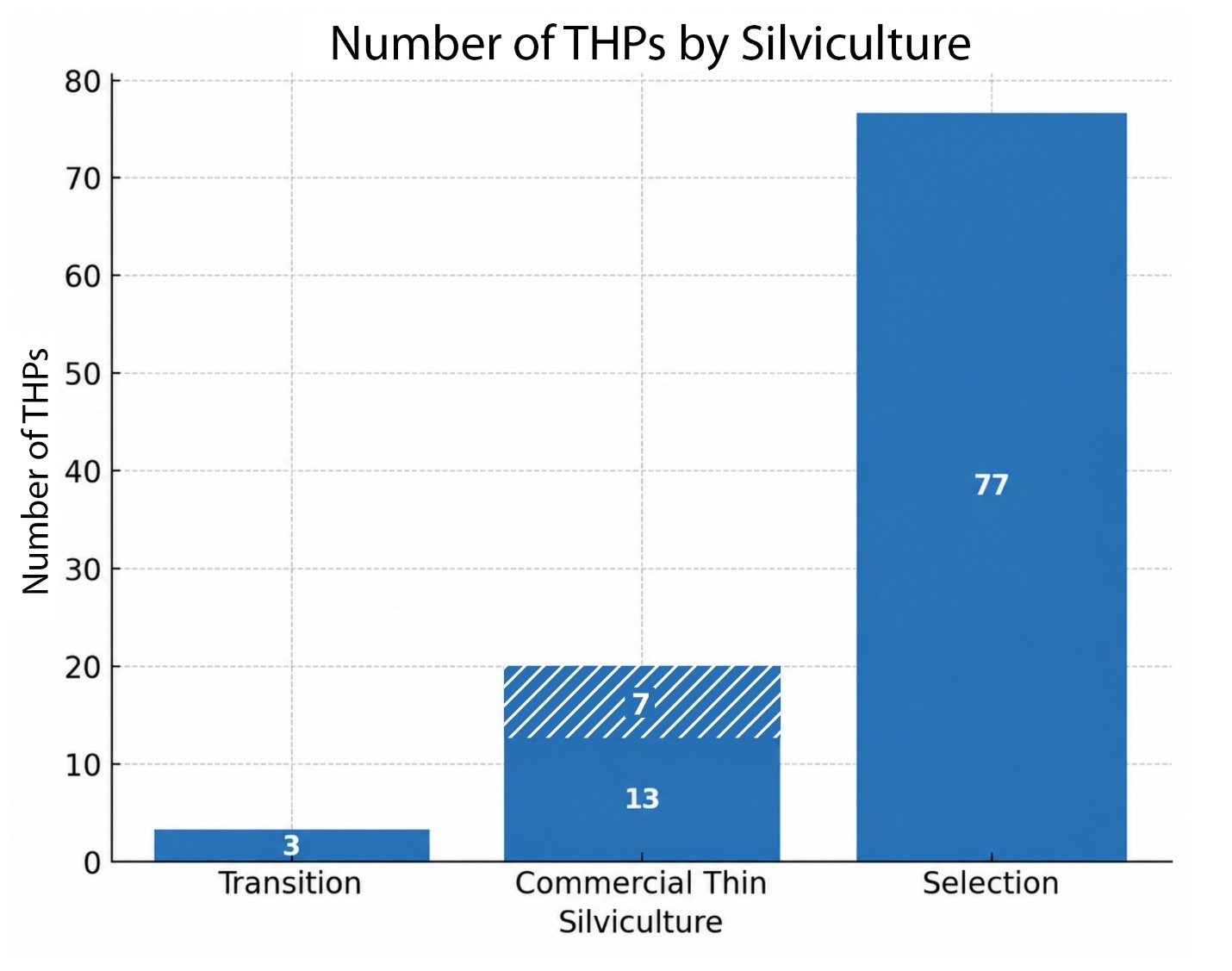
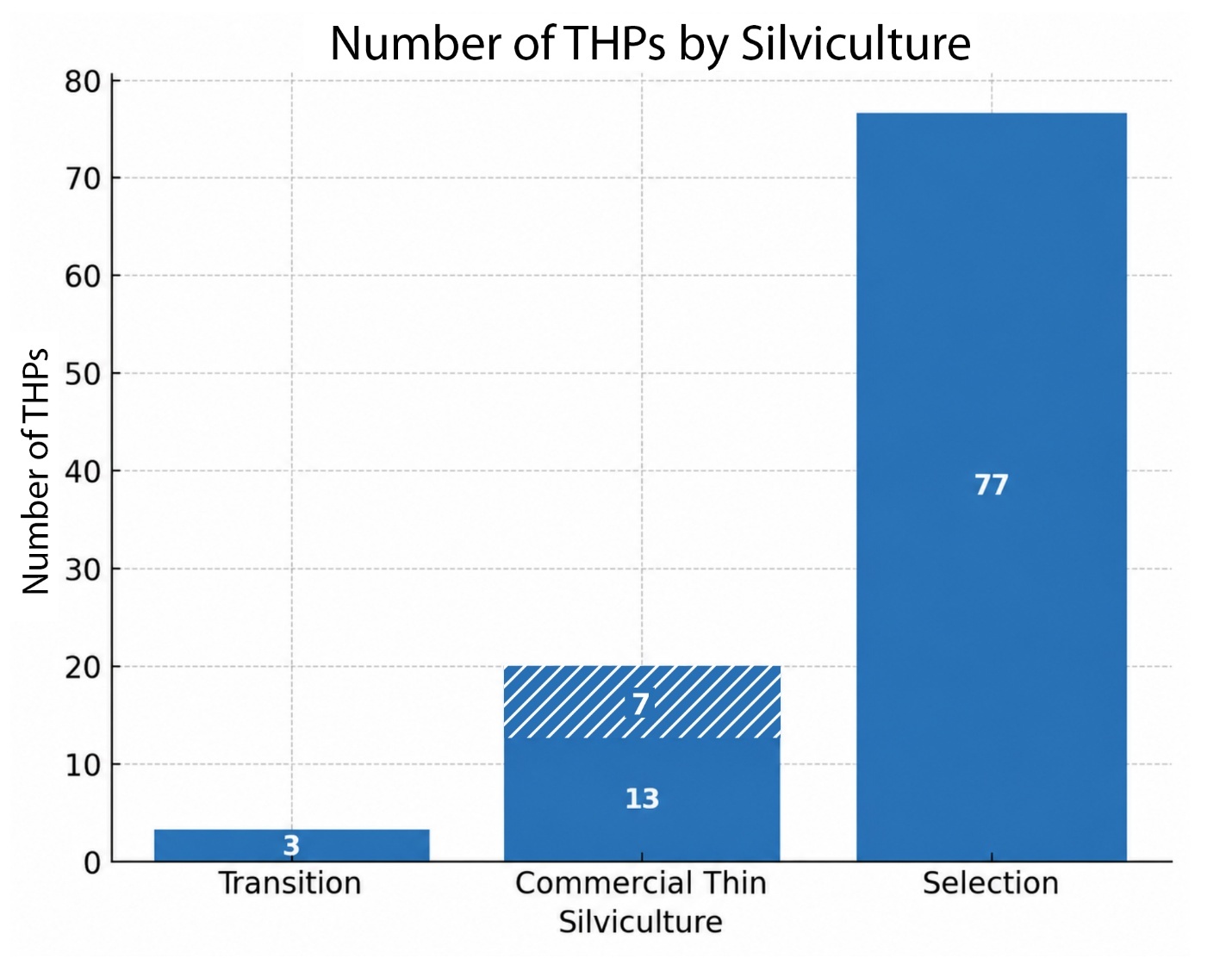
We found that THPs used one of the three methods a total of 100 times between 2018 and 2023. Of these, group selection was used 77 times, commercial thinning was used 20 times, and transition was used three times (fig. 1). The frequent use of group selection may reflect an objective of creating or maintaining multi-aged stand structures. Group selection harvesting over time can facilitate coarse-scale canopy heterogeneity and multiple cohorts — structural attributes commonly associated with resilience in frequent-fire forests. This speculation relies on the landowner and forester having a sincere desire and commitment to conduct resilience silviculture. Alternatively, group selection may be preferred simply because it permits lower post-harvest basal area retention and therefore more harvesting. In practice, the group selection method offers the greatest operational flexibility while not requiring actual long-term planning or follow-up treatments that facilitate multi-cohort stand development.
While commercial thins are intended for use in developing stands originating from clearcuts (i.e., planted stands), we suspect that much of the time it is used in mature, “wild” stands. This is not necessarily incongruent with the intent of commercial thins since, despite appearing mature and complex in structure, many of the mixed conifer forests of the Sierra Nevada are young relative to their maximum lifespan (York 2024). Further, they are often even-aged, regenerating following widespread extractive harvests approximately 100 years ago (Beesley 1996). The limited use of the transition method — despite its attraction of a low allowable basal area — could be due to the limited occurrence of sufficiently mature planted stands, most of which originated within the past three decades. Alternatively, there may be a lack of interest in transitioning such stands to multi-aged conditions because of perceptions that multi-aged systems are lower in productivity. Transitioning from even-aged to multi-aged silviculture would therefore represent a transition from higher to lower timber productivity and run counter to the objective of MSP. Studies that compare even-aged and multi-aged systems with sufficient empirical data are rare, but those that do exist suggest that multi-aged systems in dry forests are at least comparable if not superior in terms of productivity (O’Hara and Nagel 2006).
As even-aged stands that regenerated from clearcuts become mature, or as reforested areas following wildfires develop, efforts to use transition silviculture may become more common. Transition systems could provide a means to promote coarse-scale heterogeneity (0.25 to 2.5 acres), increase tree and herbaceous species diversity, maintain lower basal area, decrease surface fuel inputs, and sustain multi-cohort stands. These are all fundamental components of resilience. For the working forest landscape, transition silviculture may represent a trajectory away from even-aged structures that have had low resistance to catastrophic loss from high-severity fires (Levine et al. 2022).
Foresters do not “explain and justify” targets that are lower than CFPR standards
Among the 100 harvests we examined, only seven proposed basal area levels lower than those required by the CFPRs. Notably, all seven of these occurred under the commercial thinning designation. Upon further review, we found that six of these seven plans did not invoke the regulatory explain and justify clause. Instead, they simply referenced the alternative “lowest allowable standard” (California Code of Regulations § 912.7/932.7/952.7) without providing a justification for why this standard was being used. Only one plan — submitted by a research forest — used the explain and justify mechanism to propose a below-standard basal area.
Current rules accommodate density reductions to historical levels, but may not accommodate reductions that allow for different interpretations of resilience
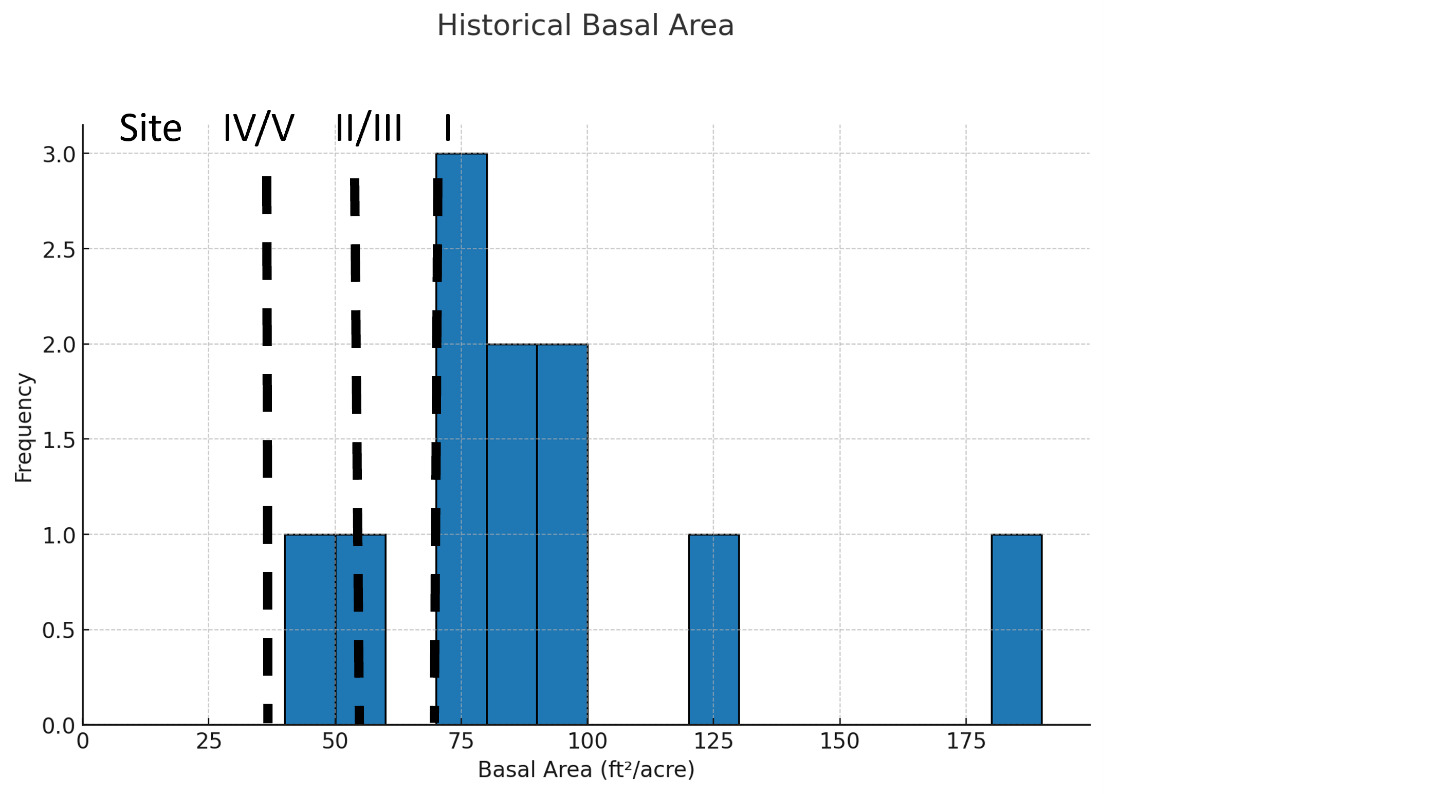
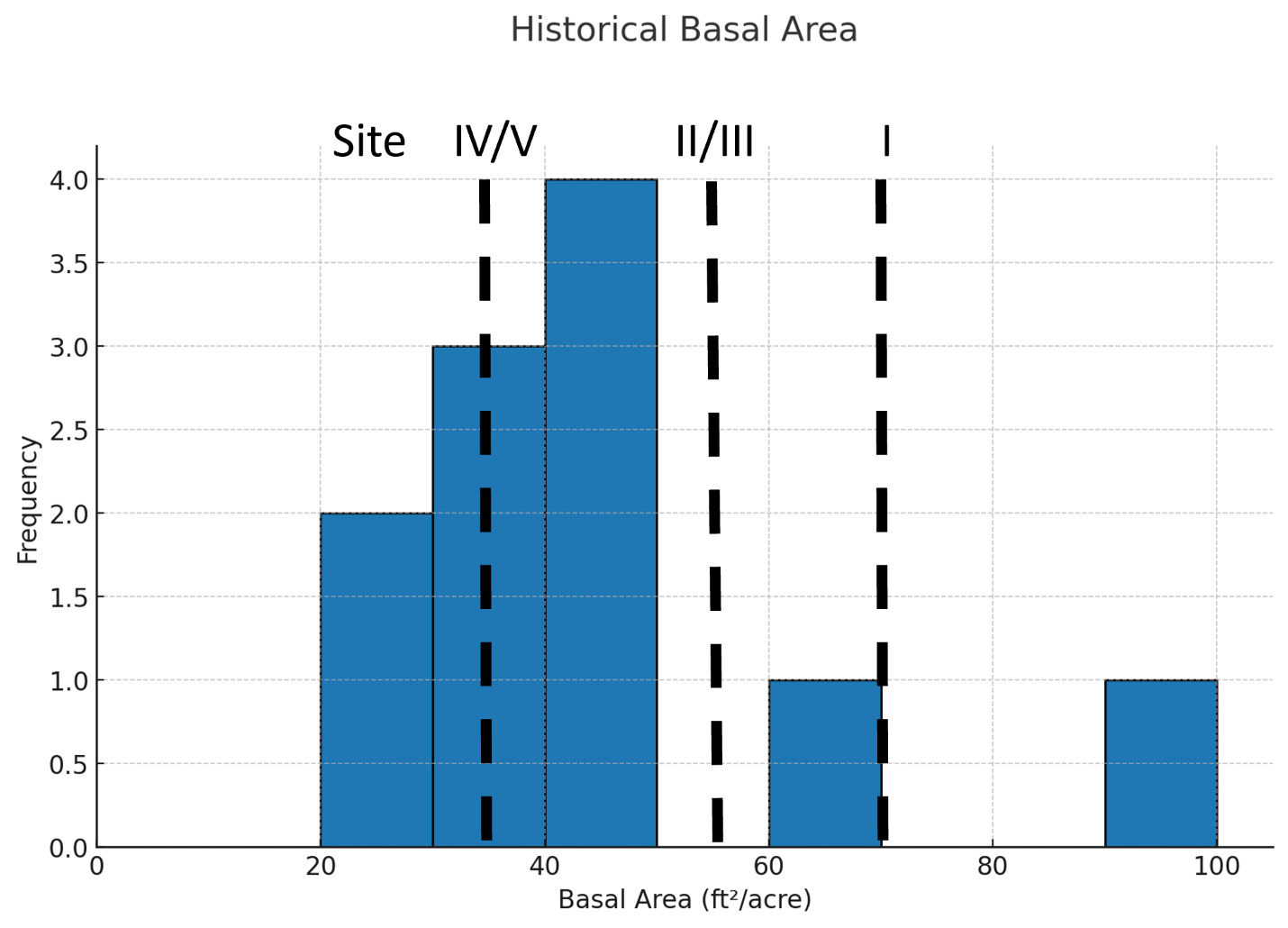
When group selection is used, we found the CFPRs to generally accommodate achieving low stand density when “low” is defined by historical reconstruction studies (table 2; fig. 2). Only two sites had historical densities that were lower than what the rules allowed, and this occurred only when medium or high productivity (which have higher retention levels) was assumed. Only after applying a 50% deduction to historical densities did we find that the CFPRs were not consistently allowing for sufficient stand density reduction (fig. 3).
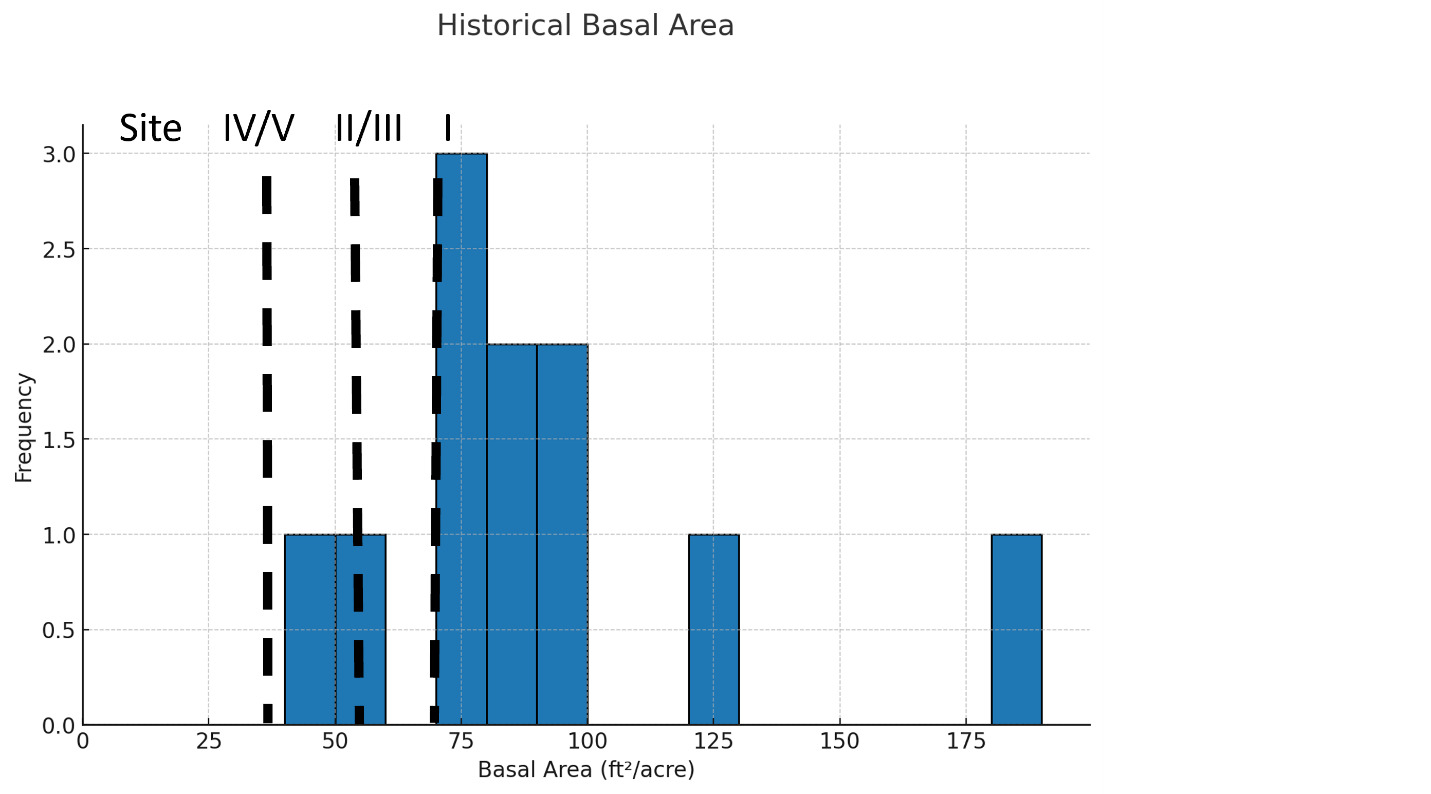
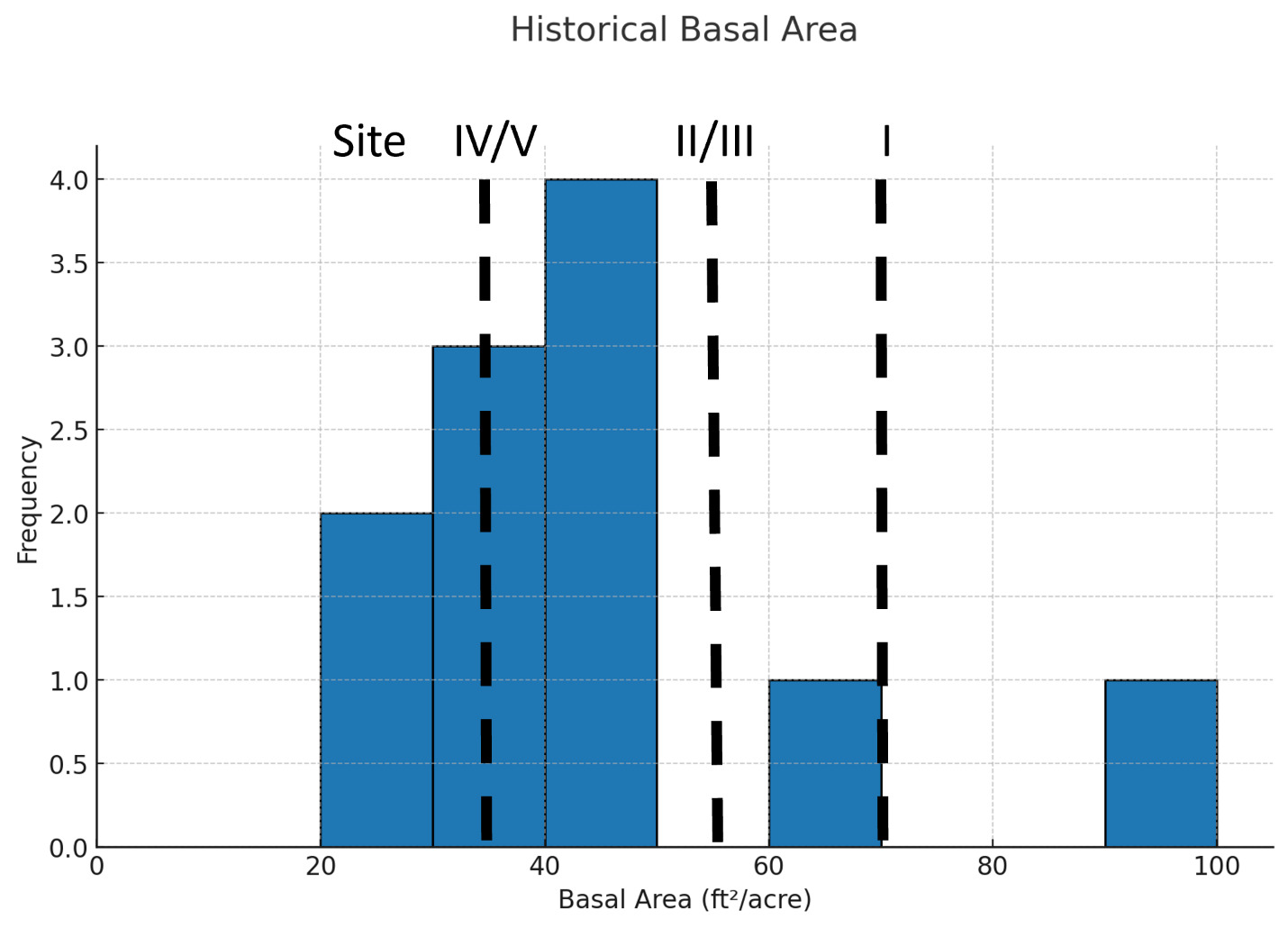
An interesting contrast between the CFPR retention standards and historical density is that, while the CFPRs increase basal area retention with site productivity, forests of the past were not substantially different in basal area among low and high productivity stands. In terms of SDI, stocking was narrowly distributed across sites, with a coefficient of variation around the mean of only 28%. The CFPR requirement to retain higher densities in productive forests (about twice as much density is required in the most productive forests compared to the least productive) is related to the MSP objective because higher productivity forests are well-known to yield more timber when stocking is maintained within higher zones (e.g., Oliver et al. 1996).
One possible explanation for why historical density would have been insensitive to productivity is related to higher fuel recovery rates in more productive stands. Rapid recovery of surface fuels following low-severity fires can lead to productive stands becoming quickly receptive to another fire after a short period (York et al. 2021). The experimental power (i.e., sample size) of confirming this with statistical significance is limited, especially given that there are only two studies that have described basal area in mesic forest types (higher productivity). As more reconstruction studies are published, such an analysis would be relevant to the topic of managing for timber production versus resilience. If fire historically maintained stocking at generally low levels across the landscape, then a regulatory framework that focused on resilience silviculture might avoid having different retention levels dependent upon site productivity. A flat retention standard that is closer to what is now the low productivity standard could simplify enforcement of retention levels and also be more aligned with historical densities and tree vigor objectives.
Resilience could be achieved if foresters could explain and justify low retention levels
A century ago, the California forest landscape looked entirely different than it does today. It was dominated by large trees and was variable in canopy structure. Low surface fuel loads were the rule and not the exception. Those who first assessed the landscape concerning its potential to grow timber (Show and Kotok 1923) understood concepts of ecological carrying capacity correctly, concluding that California forests were vastly underachieving compared to their potential timber yield. Frequent fires were the reason, as they kept forests understocked and limited them from realizing anywhere near maximum timber-producing potential. The solution was a policy of fire suppression that continues to this day (Stephens and Ruth 2005), removing fire as the regulator of stocking and replacing it with faith in Germany-based growth and yield silviculture optimized for timber production.
Many of today’s foresters recognize the pitfall in this fire-for-timber trade. Fire suppression and exclusion as a broad policy has indeed had a considerable impact on timber supplies, but it is the opposite effect that was likely envisioned a century ago. High-severity wildfires that are largely a result of fire suppression force harvesting of fire-killed trees to occur at inopportune times that are economically disadvantageous. Or fire-killed timber is not harvested at all, and large swaths of forestland are converted to non-tree vegetation types that have no foreseeable role in providing timber for a state with a heavy timber demand. The price for a century of increasing timber production at the cost of a century without frequent fires is now being reconciled with a rapid loss of timber production capacity.
Our comparison of reconstruction studies with the CFPRs suggests that the current regulations somewhat allow foresters to address this problem and take one step toward building resilience by restoring stocking levels that are near those that existed during a fire-regulated era. However, this assumes that stocking can only be reduced to achieve average historical densities and does not allow for recovery dynamics in between harvests. In other words, if the average was always the minimum stocking level, then stocking would always be greater than the average. And higher productivity sites may need to have stocking reduced well below standard levels if climate impacts are projected to reduce tree vigor and thus result in lower overall productivity. If the codified allowance to explain and justify stocking densities lower than standards listed for each silviculture type were considered by foresters to be a feasible mechanism, then they could lower stocking to adapt to these situations with reasoned arguments. Our exploration of this suggests that the explain and justify allowance is defined in policy but not used in practice. Identifying why it is not used could reveal areas of reform so that it could be used to facilitate resilience silviculture.
Policymakers could consider resilience to be as important as timber production
For several decades, progressive silviculture approaches have been based on the ecological premise that the natural disturbance regime serves as the best guide for management (e.g., Palik et al. 2021). More recently, they have also incorporated socially inclusive factors when deciding who defines the value of forests (Puettmann et al. 2025). Comparatively, the CFPRs and their direct focus on maximizing timber production through the application of traditional timber-focused systems have remained relatively static. On the other hand, rule adjustments in California are constantly made through a multi-agency and open process, presumably adapting to the emergence of new ecological science and sociological factors. Recent CEQA exemptions are an example of such adjustments. Exemptions that incentivize surface fuel reduction could be used during time periods in between active THPs, which would allow a forester to string together several planning documents in order to increase resilience. However, exemptions are prescriptive in nature, meaning they tightly constrain foresters’ treatment designs. New policies that allow foresters more freedom to design and justify silviculture systems over long time periods have been comparatively rare. The California Board of Forestry and Fire Protection, which administers the CFPRs, has a makeup of members that is designed to represent key stakeholder groups. While four of the nine members are from the timber or agriculture industry, a majority of five are from the public and could represent any number of stakeholder groups. Recommending which exact rules should change or what new rules may be adopted is well beyond the scope of this study. Rather, our results provide a starting point for discussions among policymakers of how they could help foresters meet the challenges facing California’s fire- and drought-prone forests. If changes continue to be minor in scope (e.g., like current CEQA exemptions), such adjustments would be in line with the traditional rate of regulatory change. Large-impact changes that match the scale of the rapidly emerging existential threat caused by a changing fire regime, however, may need to come from fundamental changes to the underlying goals and objectives of forest practice regulations.
A critical obstacle to current silvicultural systems becoming functional resilience silviculture systems is the deficiency of requirements or incentives to reduce surface and ladder fuels. Reducing canopy density to levels at or below historical conditions without also reducing surface and ladder fuels most likely does very little to reduce fire hazard (Agee and Skinner 2005). The CFPRs are designed to protect goals of timber production and to mitigate negative effects of logging slash created during timber operations. There are many examples of regulations throughout the CFPRs that attempt to protect timber production: minimum basal area retentions, minimum rotation ages, and minimum seedling growth standards, to name a few. But there are far fewer standards for reducing surface ladder fuels, and more often no standards at all.
Regulating the management of surface and ladder fuels so that treatments would meet a resilience objective is complex. For example, harvest plans would likely need to be active for longer than the current 5-year window to allow time for surface fuel treatments to occur after timber operations. Prescribed fire, especially, can be constrained because of variable weather conditions from year to year, although there are also mechanical and pile-burn operations that are not as weather dependent. Alternatively, regulations could be less prescriptive in nature. Rather than foresters choosing from among a set of prescriptions that are given to them in the regulations, foresters could develop their own based upon defined objectives and their experience-informed creativity. Any number of pathways for regulatory reform could be envisioned in order to facilitate resilience silviculture once the basic principles of low density, low surface fuels, and heterogeneity at appropriate scales are understood. We suggest that a starting point for development is to first articulate resilience as a primary objective. For decades, regulations have been developed around the explicit and simple intent that MSP of timber be achieved. Stating that maximum sustained resilience (MSR) is at least as important as MSP may allow for a focused regulatory path that better meets the state and landscape-level goals that have been developed.
Acknowledgments
The California Effective Monitoring Committee provided funding. A. Roughton provided a review of the manuscript. The subject editor and three anonymous reviewers provided helpful critiques.